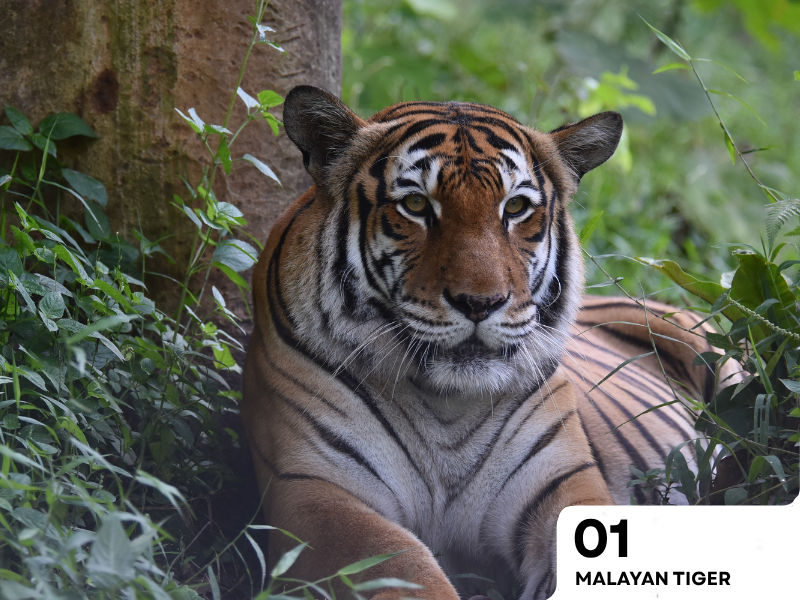
MALAYAN TIGER
The Malayan tiger is more than a national icon — it is a symbol of Malaysia’s natural heritage and strength. Yet today, fewer than 200 remain in the wild. These last surviving tigers roam only within the forests of Peninsular Malaysia, and their survival depends on the actions we take now.
Through Component 2 of the Global Wildlife Program (GWP) Malaysia, Department of Wildlife and National Parks (DWNP / PERHILITAN) are intensifying our efforts to protect and restore tiger populations in their most important habitats.
Our work focuses on three critical forest landscapes identified under the National Tiger Action Plan:
• Belum–Temengor Forest Landscape, including Royal Belum State Park and surrounding forest reserves
• Taman Negara National Park, spanning Pahang, Terengganu and Kelantan
• Endau-Rompin National Park in Johor
These forests form part of the globally significant Peninsular Malaysian Lowland and Montane Forests — one of the world’s most important biodiversity regions. They are the last strongholds of the Malayan tiger.
In these landscapes, we are strengthening anti-poaching efforts, enhancing ranger capacity, and improving coordination with partners and local communities. By using internationally recognized tools such as the Management Effectiveness Tracking Tool (METT-4), we are ensuring that our protected areas are managed more effectively, transparently, and strategically.
But protecting tigers is not just about enforcement. It is about building strong partnerships, empowering frontline teams, and restoring confidence that recovery is possible. Every snare removed, every patrol conducted, and every habitat safeguarded brings us one step closer to stabilizing tiger populations in the wild.
The core forests of Taman Negara, Belum-Temengor, and Endau-Rompin are more than protected areas — they are living landscapes that carry the hopes of a species fighting for survival. Through stronger protection and collective commitment, we are working to ensure that the roar of the Malayan tiger continues to echo through Malaysia’s forests for generations to come.
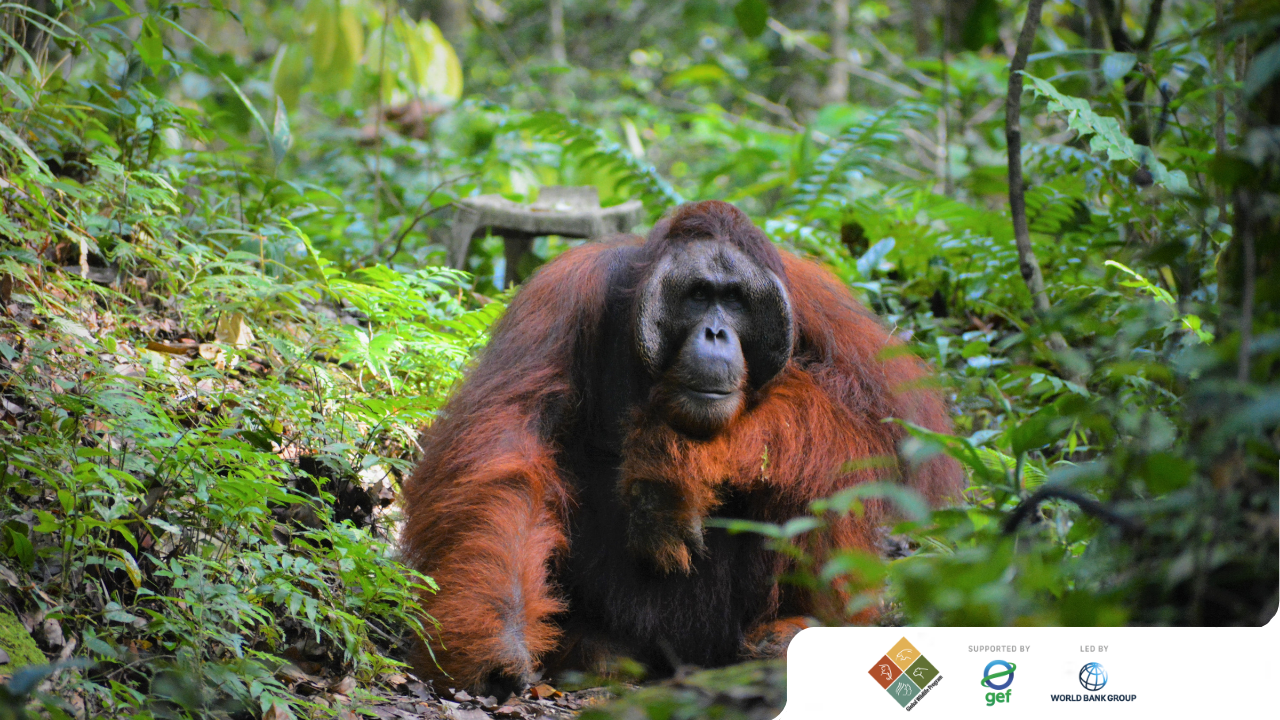
BORNEAN ORANGUTAN (SFC)
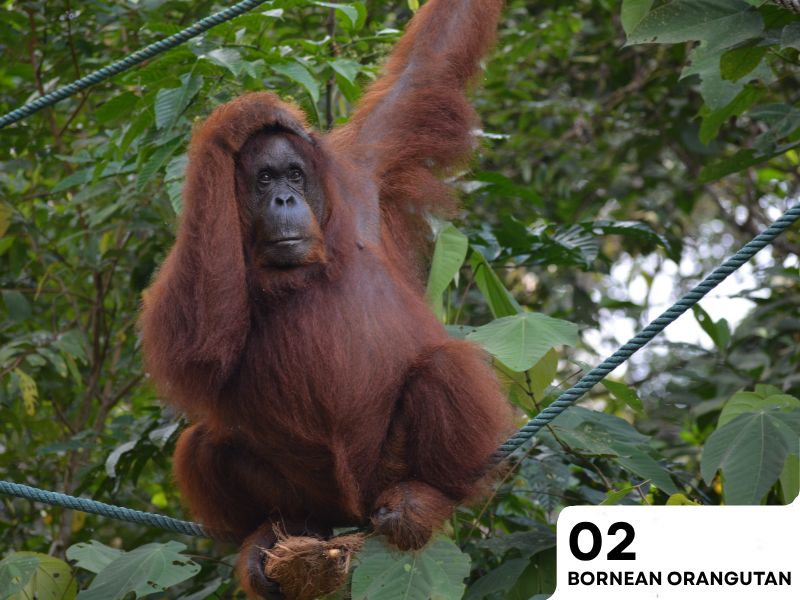
The Northwest Bornean Orangutan (Pongo p.pygmaeus) is one of Sarawak’s most
iconic and critically endangered wildlife species. Found only on the island of Borneo,
this great ape plays a vital role in maintaining healthy forest ecosystems and plays a
critical ecological role in forest regeneration and biodiversity maintenance ultimately
benefiting the local communities who live alongside them. However, habitat
fragmentation, land-use change, encroachment, forest fires and degradation and illegal
activities continue to threaten its long-term survival.
Through Component 3 of the Global Wildlife Program (GWP) Malaysia, Sarawak
Forestry Corporation (SFC) is strengthening conservation efforts for the Northwest
Bornean Orangutan and strengthen habitat protection within targeted protected areas of
Sarawak.
The project focuses on the protected areas and forest landscapes that serve as critical
habitats for the Bornean orangutan, including:
• Ulu Sebuyau National Park – 18,287 ha
• Sedilu National Park – 6,311 ha
• Gunung Lesong National Park – 595 ha
BORNEAN BANTENG (SWD)
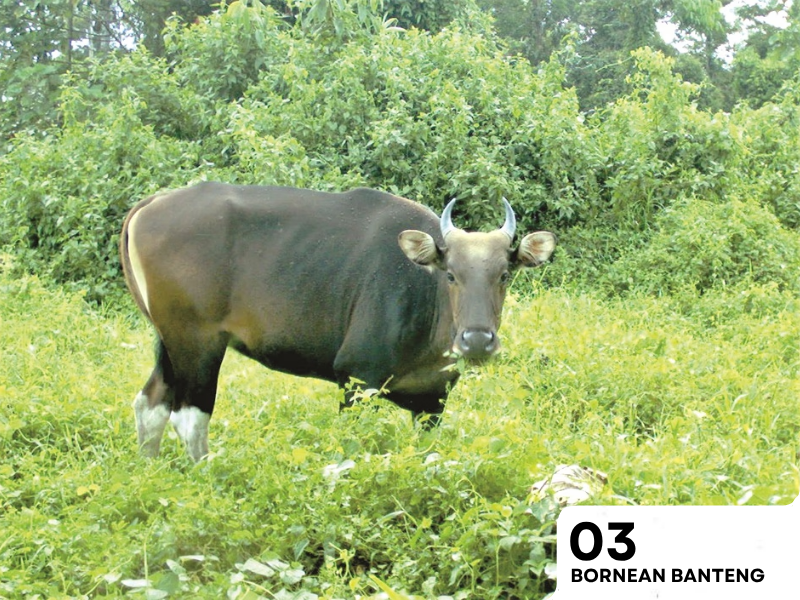
Global Wildlife Program Malaysia (GWP Malaysia) through the Sabah Wildlife Department (SWD) is carrying out banteng conservation activities in and around Maliau Basin Conservation Area (Greater Maliau Basin; https://maliaubasin.my), located in the Heart of Borneo transboundary landscape. GWP Malaysia is supporting training for Community Ranger personnel in anti-poaching patrol data analysis. This will allow for SWD to effectively deploy Community Ranger teams in poaching hotspots and better protect the banteng population. Through GWP Malaysia, SWD will also test and deploy new anti-poaching technology tools to increase patrol team capacity and productivity. A key part of protecting banteng populations is the involvement of local communities. SWD is working with partners to co-opt more local community members in anti-poaching and in the management of conservation areas outside core protected areas like Maliau Basin Conservation Area. SWD will also trial new methodology for monitoring the banteng population in Maliau Basin Conservation Area. More accurate bantengpopulation estimates will allow SWD to understand population trends and assess the effectiveness of conservation activities.
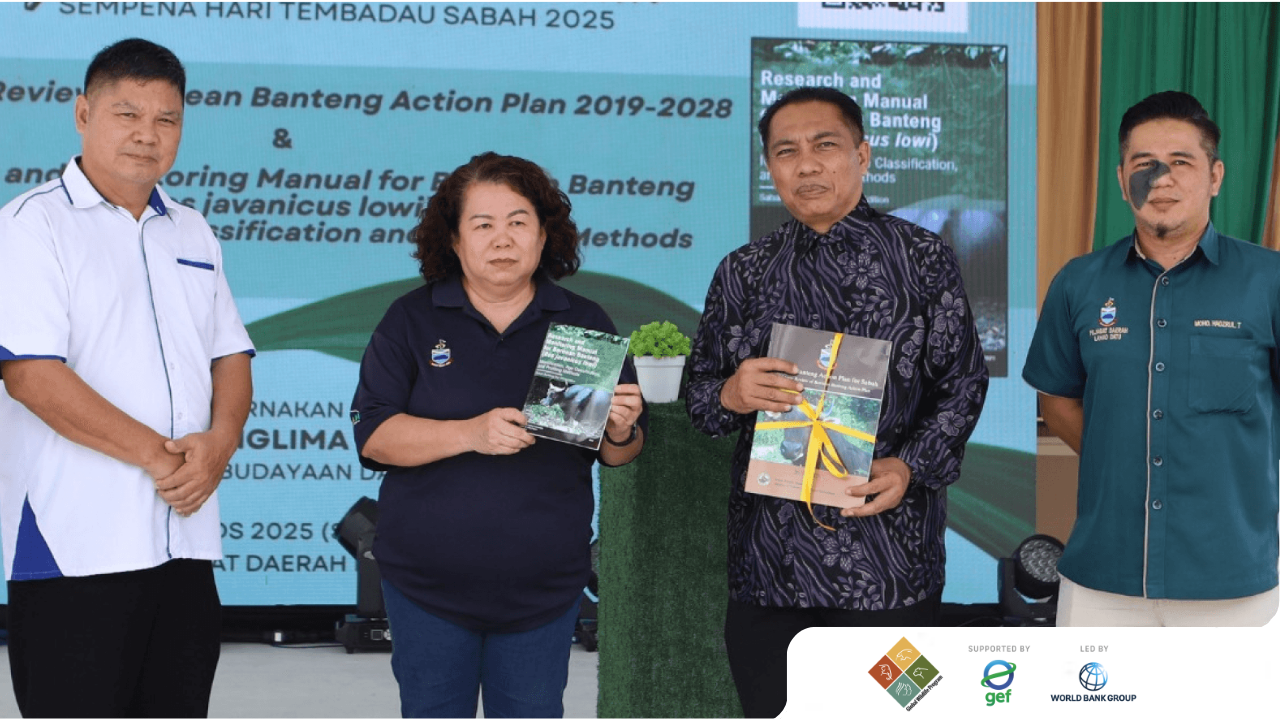
BORNEAN BANTENG ACTION PLAN FOR SABAH (2019-2028)
MID-TERM REVIEW OF BORNEAN BANTENG ACTION PLAN

-
-
How a Small Berry Brings Big Benefits to Communities in the Himalaya
Highlights High up in the Himalaya—a mile or more above sea level—lives a star of the plant world: sea buckthorn. The…
-
SUSTAINABLE DEVELOPMENT GOALS







IMPLEMENTING PARTNER

SUPPORTED BY

LED BY


RESPONSIBLE PARTIES